Home Sports Surfaces Testing About Request a Quote
Surface Application

UV Printing
on Glass.

Direct UV flatbed printing on finished glass — partitions, splashbacks, storefronts, display, and custom printed glass panels. Primer first. Ink cured on the panel. No vinyl edge to lift.

Request a Quote →
The Short Answer

We Print Glass. The Primer and the Surface Side Decide the Job.

UV printing on glass is a production process we run, not a maybe. A UV flatbed jets UV-curable ink onto a clean, primed panel and cures it under UV light as it lands. The ink hardens by photopolymerization — it does not soak in — so adhesion is a chemistry problem, not a color problem. Glass is smooth and non-porous. Print onto bare float glass and the graphic can look finished on press and still lift under a fingernail, a squeegee, or the next cleaning cycle. Prime it correctly, pick first-surface or second-surface on purpose, and lock the panel size before tempering, and you have a printed glass panel you can specify. Send the glass type, finished size, quantity, artwork status, and where the panel will live. We quote the real job.

How It Works

Glass Gives Ink Nothing to Grip

Amica Technology, which writes for production UV shops that actually decorate glass, puts the substrate problem plainly: glass is hard, chemically resistant, and very smooth and non-porous, so ink adhesion is harder than on plastic, paper, or metal, and surface pretreatment is essential before UV printing. That is the whole reason this page exists as a job page rather than a gallery. Color on glass is straightforward. A durable bond is not.

The usual production answer is a primer — typically a silane adhesion promoter — wiped or jetted onto the print face before color. INCURE’s industrial notes on UV adhesion to glass describe why: unlike a porous material, glass does not give a film microscopic pits to anchor into. Silane coupling agents act as a chemical bridge, one end bonding to the silica surface and the other integrating into the organic polymer. Mimaki, whose UV printers and primers are built for this exact class of work, is just as direct on the production side: primer is there to improve ink adhesion on glass, a substrate they describe as one where UV-curable inks were previously difficult. We do not publish a house primer brand or a concentration as “our number.” We match prep to the glass you send, print after that prep is live, and we will not quote a bare-glass job as if the ink will take care of itself.

If the part is not glass — if it is a PVC panel, polycarbonate, or another resin — that is a different substrate decision and it lives on our UV printing on plastic page. This URL owns UV printing on glass, UV print glass, and printed glass panels. It does not own plastic, drinkware, or brand-name searches for Polyprint. Storefront window graphics that don't need direct-to-glass adhesion at all — where a printed film applied to the glass is the better fit — are a separate decision covered in our UV printing on window film and static clings guide, including where perforated one-way vision film keeps sightlines open from the inside.

Silane primer or equivalent pretreatment before color
First-surface or second-surface decided before artwork is trapped
White underbase for opacity on clear and tinted glass
Panel cut, edged, and tempered before it reaches the printer
Protective clear where the face will be cleaned or exposed
Request a Quote →
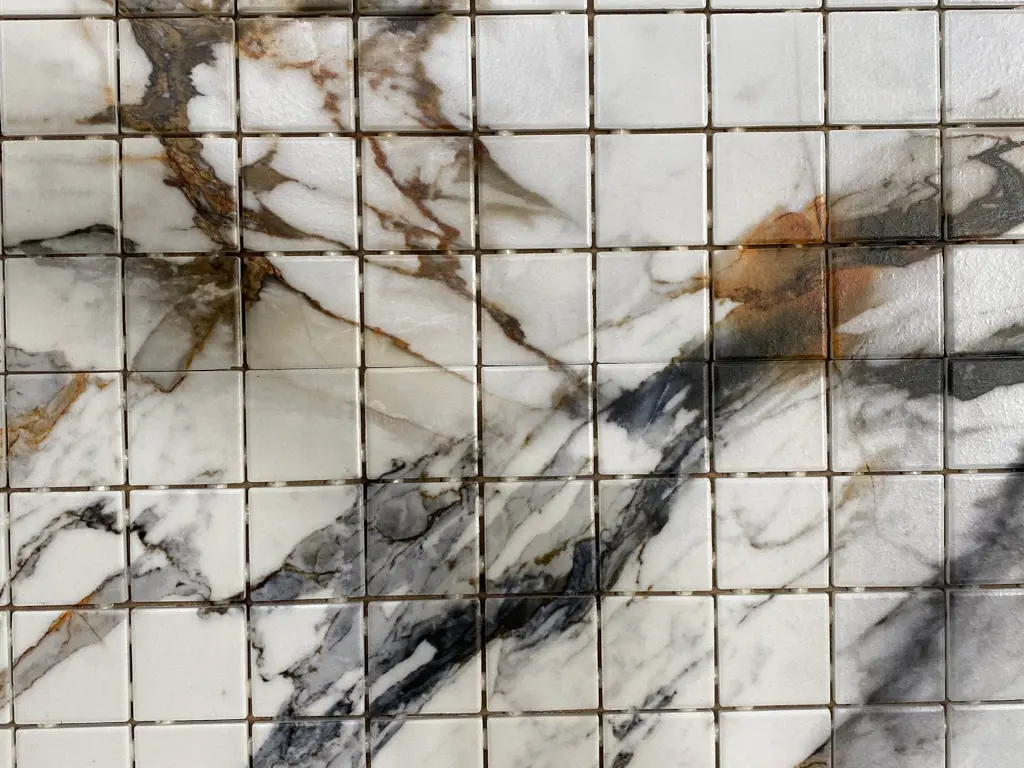
UV printed glass surface with custom graphic
Surface Side

First-Surface vs. Second-Surface Printed Glass

The same ink, the same primer, two completely different jobs. Pick the side before anyone spends time on the file.

First-Surface — Ink on the Face You Touch

First-surface printing puts the graphic on the viewer’s side of the glass. Color sits in air, not behind a pane, so it reads with maximum punch and no glass tint between the ink and the eye. The trade is exposure: cleaning chemicals, rings, abrasion, and weather all hit the ink film. First-surface is the right call when the graphic is meant to be touched, when the reverse is already occupied (a coating, a mirror, a sealed unit you cannot reach), or when the panel is viewed from the printed side only. It is the wrong call if the same face will be scrubbed daily and you expected the glass to protect the art.

Second-Surface — Ink Behind the Glass

Second-surface printing puts ink on the reverse and views it through the glass. The pane itself becomes the wear face. That is why storefront windows, kitchen and bar splashbacks, and any printed glass panel that gets washed on a schedule usually print this way. Drytac’s window-graphics guidance is written for film, but the side-of-glass logic is the same one we use for direct UV: first surface is the exposed face; second surface is protected by the glass, and the artwork is produced mirrored so it reads correctly from the viewing side. For UV print, that also reverses the ink stack — white goes down last as a backer, not first as an underbase.

White Ink Is a Spec Decision, Not a Finish Extra

Clear glass does not give CMYK a white page to sit on. Without a white layer, a red logo is a red filter. A full white flood or spot underbase (first-surface) or white backer (second-surface) is how printed glass panels hold brand color. Partial or screened white is how you get a frosted-privacy pattern that still passes light. No white is how you get a tinted see-through graphic. Tell us which of those you want. Guessing after the file is trapped is how a privacy panel comes back looking like a sticker.

What We Will Not Do With the File

We will not silently flip a first-surface file onto the back of a storefront lite and hope the type still reads. We will not print white first on a second-surface job. And we will not treat a mirrored lite, a low-E coating, or a factory back-paint as “just glass” — those faces change which side we can print and how color will look through the pane. If the unit is already glazed, say so. The quote changes when we can only reach one face.

Sequence

Temper the Glass Before UV Printing — Not After

Two different ways to decorate glass get sold under the same search phrase. Only one of them is the job on this page.

UV printing on glass is an organic ink film, cured with UV light, on a panel that is already finished. The glass is cut to size, edged, and — when the spec calls for safety glass — tempered, and only then does it come to the printer. That order is not a preference. A tempering furnace is hot enough to fuse ceramic enamel into the glass surface. Guardian Glass’s processing notes for ceramic-print spandrel work describe the other process exactly: enamels printed on soda-lime float melt during the tempering cycle and fuse permanently into a ceramic layer. Across International’s fritted-glass manufacturing notes put the same furnace window in the 610–700 °C range. A cured UV ink film does not survive that. Reheating a panel that is already tempered to “fire” a UV graphic would also destroy the temper. So the UV job happens after the heat work is done.

That has two practical consequences for anyone specifying printed glass panels. First, final dimensions are locked before the glass is ordered. A tempered lite cannot be trimmed, notched, or hole-moved after it leaves the furnace — and it cannot be trimmed after we print it either. Second, UV print is not ceramic frit. Frit is the right conversation for some facade and spandrel work where the decoration has to become part of the glass. This page is the UV conversation: full-color, photographic, short-run and custom work on a finished panel, with adhesion coming from primer and coating rather than from the furnace. If the project actually needs fired ceramic, say that on the quote. We will not dress a UV job up as fused enamel.

Float, low-iron, and already-tempered glass are the usual incoming stock. Low-iron is the honest choice when the graphic will be viewed through the pane and you do not want a green edge or a warm cast in the whites. Standard soda-lime float is fine when the print is first-surface or the tint does not matter. Coated, mirrored, laminated, or insulated units are quote items, not assumptions. Tell us the makeup.

When to Quote

What We Need Before We Price Printed Glass Panels

We quote from the panel and the end use, not from a photo of “some glass.” Send the list below and you get a real spec and a real number.

Send This

  • Finished width, height, and thickness — and whether the glass is already cut and tempered
  • Glass type if you know it: float, low-iron, tempered, laminated, mirrored, or coated / low-E
  • Quantity of unique sizes and of each size
  • First-surface or second-surface, and which side the viewer is on
  • Whether you need solid color, translucent / frosted privacy, or a see-through tint — that decides white ink
  • Indoor, covered outdoor, or full-sun exposure, plus how the face will be cleaned
  • Artwork status — final file, or still in design

We Will Tell You

  • Whether we print your supplied lites or specify a printable glass package
  • Primer, surface side, and whether white and a clear coat belong on the spec
  • Whether the panel still needs to be cut and tempered before it should reach us
  • Whether a different process is the honest answer — fired ceramic frit for a fused facade graphic, vinyl for a temporary window campaign, or a different substrate entirely

We take US glass jobs through the same contact form as every other surface. Offices and phones are the Netherlands and Belgium numbers already on this site — we are not inventing a US plant or a US line for this page. If the job is a court, tile, or other sports surface rather than a glass panel, that belongs on Sports. If you are still choosing a substrate, start at the surfaces hub.

What to Expect

UV-Printed Glass — Practical Performance

Qualitative process notes for how a printed glass panel behaves in production. Weathering hours, hardness ratings, and care live on the testing page — we are not reprinting those numbers here as a glass-specific score.

🔗

Adhesion

Primer-Dependent

Bare glass is not a printable face. Silane primer or an approved etch is the bond. We do not quote a single adhesion number for “glass.”

🎨

Color on Clear

White Underbase

Opaque white keeps CMYK accurate on clear and tinted glass and becomes the backer on second-surface work.

🪟

Wear Face

Pick the Side

Second-surface lets the glass protect the ink. First-surface puts color in air and needs coating and a cleaning plan.

🔥

Heat Sequence

Temper, Then Print

UV ink is cured on a finished lite. The furnace is for tempering and for ceramic frit — not for this ink.

View Full Testing Data →
Where It Performs

Applications for UV Printing on Glass

These are the printed glass panel jobs we actually want to quote. If your part is a cup, a plastic sheet, or a court, you are on the wrong URL.

Architecture & Interiors

  • Office partitions and conference-room glass with branded graphics or privacy patterns
  • Splashbacks, feature walls, and balustrade glass
  • Donor and recognition panels where a photographic or full-color mark belongs on the glass, not on a plate beside it
  • Interior decorative lites that need a custom image without a vinyl overlay

Retail & Hospitality

  • Storefront and showroom glass — second-surface when the pane will be washed from the street side
  • Display cases, counter glass, and point-of-sale panels
  • Backlit printed glass panels where white density and the viewing side have to be specified together

Industrial & Technical

  • Equipment glass with printed scales, markings, and instructions
  • Safety and wayfinding graphics on interior glass
  • Control-panel and enclosure glass where the graphic has to stay put under cleaning

What This Page Is Not

  • Not UV printing on plastic — that is a resin-and-surface-energy job on its own URL
  • Not tumblers, drinkware, or rotary bottle work
  • Not canvas, and not a homepage brand page for “poly print” / “polyprint”
  • Not a ceramic-frit facade encyclopedia — we will say so if that is the process you actually need
FAQ

UV Printing on Glass — Common Questions

Does UV ink stick to glass without a primer?

Not durably. Glass is smooth and non-porous, so a cured UV ink film on bare, unprimed float glass has almost nothing to key into. A silane adhesion promoter chemically bridges the organic ink to the silica surface. Light abrasion or etching of the print area is the other real option, and only where the finished look allows it. Send the glass type and we will specify the prep on the quote.

Should glass be printed on the first or second surface?

It depends on which side the viewer is on and what the graphic has to survive. First-surface printing puts ink on the face people touch — maximum color punch, exposed to abrasion and cleaning. Second-surface printing puts the ink on the reverse and views it through the glass, so the glass itself protects the print. That is the usual choice for storefronts, splashbacks, and anything scrubbed regularly. Second-surface artwork must be mirrored and the ink layers reversed, with white printed last rather than first.

Can you print full-color photographic images on glass?

Yes. UV printing on glass supports photographic-quality, full-color graphics, brand patterns, logos, and gradients on printed glass panels. On transparent glass a white ink layer controls opacity: a full white underbase makes color read solid; partial or screened white produces a translucent or frosted-privacy effect that still passes light. Omitting white leaves a tinted, see-through graphic.

What types of glass can be printed, and does tempering matter?

Float, low-iron, and tempered glass all print as a UV job. Sequence matters: the panel is cut, shaped, edged, and tempered before printing. Tempering runs through a furnace hot enough to fuse ceramic frit into the glass — far hotter than a cured organic UV ink film can survive — and a tempered panel cannot be trimmed afterward. Final dimensions have to be locked before the panel is ordered.

Is printed glass durable enough for exterior use, and how does it compare to an applied vinyl graphic?

A properly primed, UV-printed glass panel can be specified for interior and exterior use. Coating, exposure, and care decide how it holds up — that belongs on the quote and on our testing page, not as a year-count here. Versus an applied vinyl graphic, printed ink has no film edge that can lift or trap moisture at the border, which is usually the first failure point on a vinyl-clad window. Request a quote here.

Sources

What We Cited

Manufacturer and industry pages fetched before they were used. We do not treat their numbers as a Polyprint house spec.

Explore More Surfaces

Related Applications

Have a Glass Project in Mind?

Send panel sizes, glass type, surface side, artwork, and where it will live. We will come back with the prep, the spec, and the price.

Website by Rank Easy Digital — websites, SEO & AI search visibility for your business. Get a free consult →