A full-color company logo on a hard hat is easy to print and easy to get wrong. The helmet is protective equipment, so the manufacturer’s rules decide what ink, primer and placement are acceptable before any artwork does.
Request a Quote →Yes, technically. UV-curable ink will print and cure on most hard hat shells. But a hard hat that will be worn on a job site is head protection under OSHA’s standard, 29 CFR 1910.135, which incorporates the ANSI Z89.1 helmet standard by reference. In a 2009 interpretation letter, OSHA said painting or applying stickers to a helmet shell must be done according to the manufacturer’s instructions, unless the employer can show the altered helmet is as effective as one that meets Z89.1. So the right order is: helmet model first, the maker’s written guidance second, artwork third. For hats that are not worn as PPE, such as display, award or ceremony hats, normal product printing rules apply.
Most of what we print is judged on looks and durability. A hard hat is judged on whether it still protects the person wearing it, and that changes which questions come first. OSHA’s letter names three specific concerns with decorating a shell.
Chemical attack. OSHA points out that paints, thinners and solvents, discussed in the appendices of ANSI Z89.1, can attack or damage a helmet shell and reduce protection. That matters for any print process that needs a wipe-down solvent, an adhesion promoter, or a primer before the ink goes on.
Hidden damage. Workers are supposed to inspect a hard hat before use for dents, cracks, penetration and wear. A large opaque graphic can cover exactly the area where a crack would show.
Electrical resistance. OSHA also notes that paint and stickers may eliminate electrical resistance. On helmets rated for electrical protection, that is a reason to be especially strict about what goes on the shell.
Ask About Your Hard Hat Model →
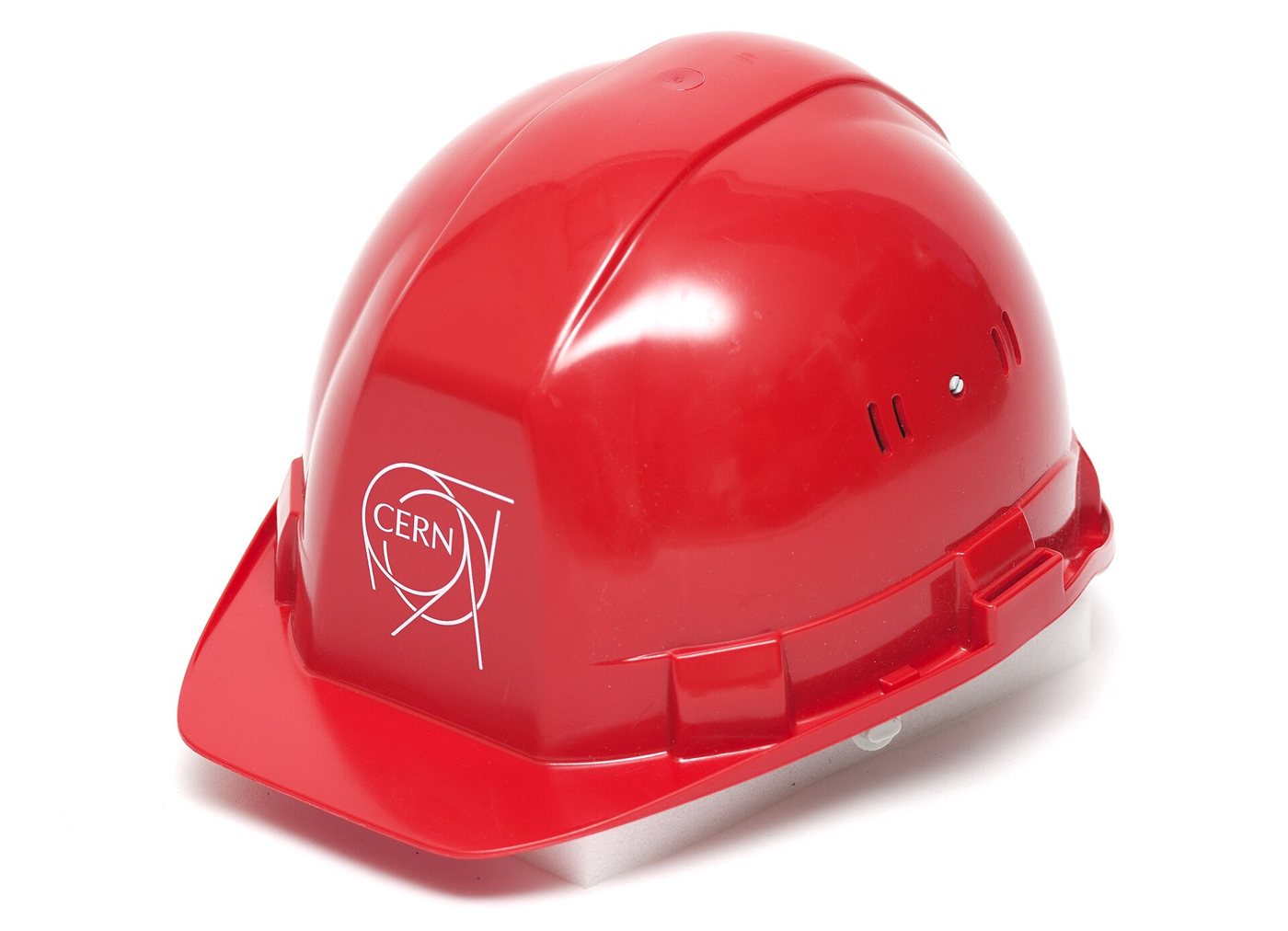
A single-color logo printed on a hard hat shell. Photo: Ashley Pomeroy, “CERN Hard Hat 9645,” Wikimedia Commons, CC BY 4.0.
OSHA does not ban logos or stickers. It says the alteration is acceptable if the manufacturer authorizes it, or if the employer can show the helmet’s reliability is not affected and the decoration does not make defects harder to spot. In practice almost every buyer takes the first route, because proving equivalence on your own is not realistic for a logo order. Here is what three large helmet makers publish.
The pattern is consistent. The manufacturer is the authority on its own shell. Some offer factory decoration, some allow labels that meet their adhesive rules, and most are wary of paints and solvents. Your helmet’s user instructions are the document that applies to your order, not a general rule from another brand.
Each one trades color and flexibility against how easy it is to get approved.
| Method | Color | Who approves it | Best for |
|---|---|---|---|
| Factory decoration by the helmet maker (often pad printing) | Spot colors; full-color options vary by maker | The manufacturer, by definition | Large fleet orders of PPE hats with a fixed logo |
| UV-printed decal or label on stock the maker allows | Full color, gradients, photos, white ink | Helmet maker approves the label material and adhesive | Mixed fleets, short runs, crew names, site or trade IDs |
| Direct UV print on the shell | Full color | Needs the maker’s written OK for ink, any primer and print area | PPE only with that approval; otherwise non-PPE hats |
| Direct UV print on non-PPE hats | Full color | Normal product rules | Award, display, ceremony and souvenir hats |
Pad printing is the traditional process for curved helmet shells, and it is what Bullard describes for its factory logos. If you are weighing it against a direct UV print for other curved parts, see our comparison of UV printing vs. pad printing.
Hard hat shells are molded from plastics such as high-density polyethylene (HDPE), ABS and polycarbonate, and some high-heat helmets use fiberglass or other composites. MSA’s EN 397 guidance names HDPE, PC and ABS as shells that sticker glue or marker solvent can damage over time. The shell material is printed in the helmet’s labeling and user instructions.
For a printer, polyethylene is the hard one. It is a low-surface-energy plastic, so UV ink tends to bead and peel unless the surface is treated or primed first. That is the step that collides with PPE rules: an adhesion promoter is a chemical applied to the shell, which is exactly what helmet makers caution against. We explain how those primers work in adhesion promoters and primers for UV printing.
Tell us the helmet brand and model, how many hats, and whether they’ll be worn as PPE. We’ll tell you which route fits before anything gets printed.
Placement rules come from the manufacturer, but the guidance published by Bullard and the reasoning in OSHA’s letter point the same way. Keep graphics off the edge, keep them small, and never let them hide the shell.
If the goal is identification rather than branding, such as names, crew numbers or certification stickers, small printed labels usually do the job with less coverage than a logo. The same approach we use for nameplates and asset tags applies here: durable, small, and placed where the maker allows.
Construction firms rarely order just hats. The same project usually needs site signage, trailer and fleet graphics, and safety signs. See how we approach UV printing for construction companies and contractors and OSHA and ANSI safety signs.
We would rather tell you up front that a factory-decorated hat or an approved decal is the right answer than print something your safety manager has to pull from service.
Physically, yes: UV-curable ink can be jetted onto most hard hat shells. Whether you should depends on the helmet manufacturer. OSHA's 2009 interpretation letter says painting or applying stickers to a protective helmet must follow the manufacturer's instructions unless the employer can show the altered helmet is as effective as one meeting ANSI Z89.1. Get the maker's written OK for the ink, any primer, and the print area before decorating hats that will be worn as PPE.
Not automatically. MSA, for example, states that customizing its hard hats with a company logo or striping through its own program does not affect ANSI or CSA certification. The risk comes from unapproved chemicals and coverage: OSHA notes that paints, thinners and solvents can attack a shell, and that paint or stickers can hide cracks and reduce electrical resistance. Approval from the helmet maker is what settles it.
Follow the manufacturer's guidance for the specific model. Bullard's technical bulletin, as one example, says adhesive stickers should sit at least 3/4 inch from the edge of the helmet, cover as little of the shell as practical so it can still be inspected, and that engraving is limited to the underside of the brim. Never cover a crack or damaged area.
Often it is the easier route to approval. Several manufacturers allow adhesive labels that meet their adhesive or material requirements, and a decal can be printed in full color, cut to shape and applied away from the edge. OSHA's letter also points to see-through stickers as a way to keep defects visible. Confirm the label stock and adhesive with the helmet maker first.
Anything that is not worn as head protection: display and trophy hard hats, groundbreaking-ceremony and souvenir hats that are clearly not issued as PPE, hard hat storage racks and signage, and hard hat area safety signs. Those follow normal product rules rather than OSHA's head-protection standard.
Sources: OSHA standard interpretation, “Painting or placement of adhesive stickers on protective helmet shell,” October 27, 2009 (osha.gov); MSA Safety, Custom Hard Hats FAQ; Bullard technical bulletin, “Use of Adhesive Stickers and Other Marking Methods on Bullard Hard Hat Shells”; MSA EMEA, How a PPE product may lose its approved protective performance. Checked November 9, 2026.
Send the hard hat model and your artwork. We’ll recommend decal, direct print or factory decoration, and quote the route that keeps your helmets in service.