Home Sports Surfaces Testing About Request a Quote
Buying Guide

UV Printing for
Senior Living & Memory Care Communities.

Durable, high-contrast wayfinding and interior branding for dining rooms, activity spaces, and resident corridors — built around ADA visual-contrast rules and, in memory care, a dementia-friendly design brief that goes beyond the minimum.

Request a Quote →
Three Things to Get Right First

Wayfinding, Room ID, and Memory Care Aren't the Same Spec

Directional wayfinding signs need to meet visual contrast standards but not necessarily tactile or Braille requirements. Permanent room-identification signs are held to the stricter tactile-and-Braille standard. Memory care wayfinding typically goes beyond both, with higher contrast, larger plain-language type, and lower mounting heights aimed at residents who may not look up or process abbreviations quickly. Getting these three categories confused is the most common spec mistake on a senior living project.

Where It Shows Up

What Senior Living Communities Order

Dining room and activity room branding, front-of-house lobby graphics, and standard directional wayfinding cover most of a general senior living community's order — the same category of interior branding work covered for medical and healthcare facilities, sized for a residential rather than clinical feel. Multi-location operators add brand-consistency packages that keep wayfinding recognizable from one community to the next.

Memory care wings order a different mix: higher-contrast directional cues, door and room differentiation graphics that help a resident recognize their own space at a glance, and simplified icon systems that rely less on reading. See our signage and wayfinding guide for how wayfinding is generally specified before applying the memory care layer on top.

Standard directional and room-finding wayfinding
High-contrast memory care directional cues
Dining and activity room branding
Door and room differentiation graphics
Multi-community brand consistency
Talk Through Your Project →
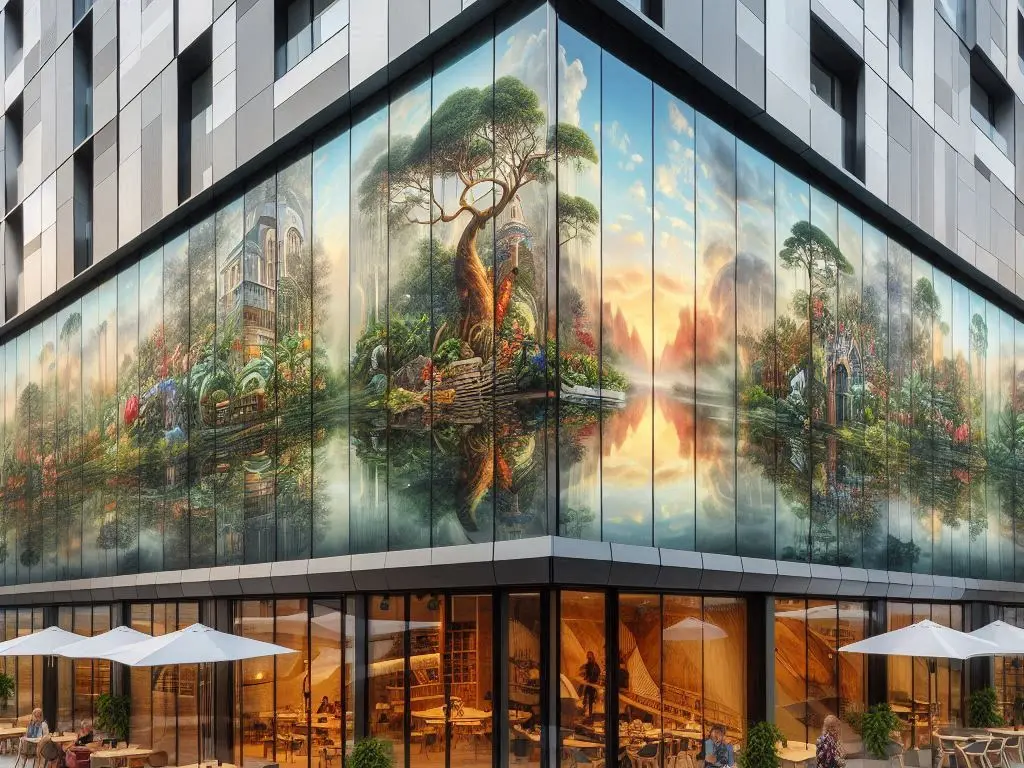
UV printed interior panel finish suited to a senior living community
Fit Check

Where This Fits a Senior Living Project — and Where It Doesn't

A Strong Fit

  • Wayfinding and room ID signage that needs to hold visual contrast standards over years, not fade like printed vinyl
  • Memory care corridors that need higher-than-standard contrast and durable, cleanable finishes
  • Multi-community operators that need matching wayfinding across locations

Worth a Second Look

  • Resident name plates that change with turnover — a swappable insert system may outlast a fully custom panel
  • Seasonal or rotating activity board content better suited to a printed insert than a permanent panel

Not a Good Fit

  • Permanent room-ID signage without the required raised tactile characters and Braille — confirm code requirements before finalizing the design
  • Content that needs frequent per-resident changes, like daily meal boards

What to Confirm Before It Goes to Print

  • Whether each sign is wayfinding, permanent room ID, or memory care — the code requirements differ
  • Mounting height, especially for memory care corridors
  • The disinfectant or cleaning protocol in use
Design Standard

Why Memory Care Signage Needs a Different Brief Than Standard ADA

Standard ADA-compliant signage sets a floor: sign position, contrast, character height, and Braille for permanent labels, with wayfinding and directional signs held to visual contrast criteria without the tactile requirement. Memory care design generally treats that floor as a starting point rather than the target — using contrast well above the minimum, larger plain-language type, familiar icons paired with words, and mounting heights suited to residents who may not look upward for a sign the way a younger visitor would.

The print process itself is straightforward once the design brief is locked — the harder part is getting the category right before production: is this permanent room ID (tactile and Braille required), general wayfinding (visual contrast, no tactile requirement), or memory care (contrast and legibility beyond the code minimum)? Confirming that up front avoids reprinting signage that technically passed code review but doesn't work for the residents using it.

Send us your sign schedule and which categories apply where, and we'll come back with a spec and layout for each.

Tested Standard

Same Coating Standard as Every Polyprint Surface

Senior living wayfinding and interior panels are finished under the same lab-tested performance benchmark used across every application.

✏️

Scratch Hardness

6H Pencil

EN 15184 pencil hardness test — relevant to corridor and cart traffic.

🧴

Chemical Exposure

Coating-Dependent

Clearcoat spec determines resistance to disinfectant protocols closer to healthcare than standard hospitality.

🔆

Print Contrast

Above-Minimum Available

UV-printed color can hold contrast well past ADA minimums, useful for memory care wayfinding.

🎨

Fade Resistance

UV-Stable Ink

Printed contrast holds up over years under interior lighting, unlike printed vinyl that fades and needs replacement.

View Full Testing Data →
FAQ

UV Printing for Senior Living & Memory Care — Common Questions

Does senior living wayfinding signage legally need to meet ADA contrast rules?

Directional wayfinding signs need to meet visual contrast criteria but not necessarily tactile or Braille requirements. Permanent room-ID signs are held to the stricter tactile-and-Braille standard. Knowing which category applies matters before production starts.

Is memory care signage just senior living signage with bigger text?

No — memory care wayfinding typically uses higher contrast than the minimum, plain language, familiar icons, and lower mounting heights. It's a dementia-friendly design brief, not just a font-size adjustment.

What actually gets ordered for a senior living community versus a memory care wing?

General communities order dining, activity room, and standard wayfinding. Memory care wings add higher-contrast cues and door differentiation graphics — a different brief even within the same building.

Can printed panels handle the cleaning frequency of a senior living community?

Yes — cleaning frequency runs closer to healthcare than standard hospitality, and the same protective coating used across every Polyprint surface is built for that. See our durability and care guide.

Can a senior living operator with multiple communities keep wayfinding consistent across locations?

Yes — the same color-matching process used for any multi-location client keeps wayfinding consistent from the flagship community to the newest build. Request a quote here.

Explore More Surfaces

Related Applications

Have a Senior Living or Memory Care Project to Print?

Send us your sign schedule and which categories apply where. We'll come back with a spec and layout for each.

Website by Rank Easy Digital — websites, SEO & AI search visibility for your business. Get a free consult →