UV flatbed printing on wood combines the warmth and texture of natural and engineered wood with the precision and versatility of direct digital printing. Whether you're producing custom interior décor, branded wood signage, personalized gifts, or architectural elements, UV printing on wood offers a production path that no traditional printing or engraving method can match for speed and detail.

How UV Printing on Wood Works

UV flatbed printing uses a rigid-bed inkjet printer where the print head passes over a stationary substrate, depositing UV-curable ink that is immediately cured solid by UV lamps mounted alongside the print head. Unlike solvent or latex inkjet printing, UV ink cures by photopolymerization — not evaporation — which means it bonds to virtually any solid surface, including wood, instantly and without requiring heat.

The result is a print that sits on the wood surface (or very slightly into the grain on open-pore wood) as a cured polymer layer, rather than penetrating the fibers the way dyes or stains do. This makes UV printing distinct from wood staining or laser engraving — it's a full-color surface-bonded print with the visual properties of traditional ink on paper but the durability of a cured resin.

Wood Substrates for UV Printing

MDF and HDF

Medium-density fiberboard (MDF) and high-density fiberboard (HDF) are the preferred substrates for UV printing that requires consistent color reproduction and fine detail. The uniform, smooth surface eliminates grain variation, giving the UV ink a flat, stable printing surface. MDF accepts UV ink with minimal prep and produces vibrant, consistent results across large production runs.

MDF is particularly well-suited for:

  • Interior signage and display panels
  • Custom wall décor and art panels
  • Retail fixtures and point-of-purchase displays
  • Photo-quality personalized panels

Natural Hardwoods

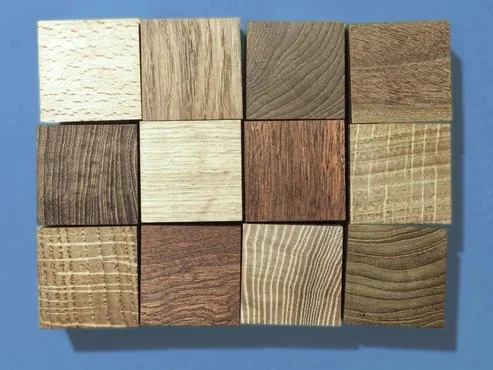
Oak, maple, walnut, cherry, and birch all UV print well with appropriate surface preparation. The natural grain becomes part of the aesthetic — color from the print overlays the grain pattern, creating a visual effect that can't be replicated on any other substrate. Tight-grain species (maple, cherry) produce cleaner, more detailed prints. Open-grain species (oak, ash) create more texture variation in the printed surface.

For best results on natural hardwood, surface preparation is essential (see below).

Plywood

Birch plywood and other cabinet-grade plywood prints reasonably well, but face-ply variation and grain pockets create surface inconsistency that affects ink adhesion in some areas. Pre-sealing with a UV primer coat before printing significantly improves results. Void-prone construction plywood is not recommended for production printing.

Engineered and Bamboo

Bamboo panels, strand board, and engineered hardwood with factory-applied veneer surfaces are generally excellent UV printing substrates, combining stability and surface consistency. Bamboo in particular has become a popular sustainable substrate for eco-positioned branded products.

Surface Preparation for UV Printing on Wood

Surface preparation is the most important variable in UV printing on wood. More failures trace back to inadequate prep than to any printing parameter.

Sanding and smoothing

For natural hardwoods and rough-surfaced substrates, sand to at least 220 grit before printing. Remove all dust with a tack cloth or compressed air before feeding to the printer. Surface roughness above 25 microns Ra will visibly affect fine-detail print quality.

Sealing and priming

Highly porous or open-grained wood absorbs ink unevenly, causing color inconsistency and adhesion problems. A UV primer coat or clear sealer applied before printing fills open pores and creates a consistent absorption surface. For production work on natural hardwood, a white UV primer undercoat also significantly improves color vibrancy — printing onto an unsealed dark wood substrate absorbs UV light and mutes colors.

Moisture content

Wood must be at equilibrium moisture content (EMC) for the production environment before printing. Green or wet wood will continue to expand and contract after printing, causing the cured ink layer to crack or delaminate. Target 6–10% moisture content for interior applications.

Flatness and thickness tolerance

UV flatbed printers require the substrate surface to pass under the print head within a tight clearance — typically 1–3mm of the nozzle plate. Warped boards, uneven thickness, or rough-sawn lumber can cause head strikes that damage both the substrate and the print head. Jointed and planed surfaces are required for natural solid wood; MDF, plywood, and engineered panels are typically flat enough to print without additional preparation.

Color and Design Considerations

Grain as a design element

One of the most distinctive characteristics of UV printing on natural wood is the interaction between the printed colors and the underlying grain pattern. Because UV ink is semi-transparent at standard densities, the grain shows through the print to varying degrees depending on ink coverage. Designs that embrace the grain — using it as a background texture visible through the image — tend to look more intentional and premium than designs that attempt to block the grain entirely.

If the design requires grain-free color accuracy (logos with specific brand colors, photographic reproductions), a white ink underprint should be specified to opacify the wood surface before the color layers are applied.

White ink capability

UV printers equipped with white ink can print a white base layer before color, enabling full-color accurate reproduction on dark or heavily grained substrates. White ink also enables printing light colors on dark stained or ebonized wood. Without white ink capability, printing on dark substrates produces muted, low-contrast color.

Varnish and texture layers

Many UV printers can deposit a clear varnish layer as part of the print sequence, building up texture or creating gloss/matte differential finishes. Selective varnish over specific design elements creates tactile embossing effects that are particularly well-suited to wood décor applications.

UV Print on Wood — Performance Characteristics

Adhesion

Excellent on sealed and primed surfaces. Good on smooth natural hardwoods. Variable on open-grain and porous substrates without primer.

Indoor Durability

10+ years on properly prepared MDF and hardwood substrates under normal interior lighting and handling conditions.

Outdoor Durability

2–5 years uncoated; 5–10 years with UV-protective clearcoat on exterior-grade substrate with sealed edges.

Resolution

720–1440 DPI standard. Fine detail limited by substrate surface texture on natural hardwood; excellent on MDF.

Color Gamut

Wide with white ink underprint on sealed surfaces. Narrower on dark or unsealed wood without white layer.

Thickness Range

Substrates from 1mm veneer to 50mm+ solid panels, depending on printer bed clearance and configuration.

Applications

  • Custom interior signage — lobby signs, wayfinding panels, office nameplates on natural wood or MDF
  • Home and commercial décor — wall art panels, decorative backsplash panels, personalized plaques
  • Branded merchandise and gifts — custom cutting boards, wine boxes, keepsake panels, awards
  • Retail and hospitality displays — menu boards, shelf talkers, branded fixture panels
  • Architectural elements — feature wall panels, door panels, reception desk facings
  • Promotional products — custom calendars, photo panels, corporate gifts

Frequently Asked Questions

Can you UV print directly on wood?

Yes. UV flatbed printers deposit UV-curable ink directly onto the wood surface — no transfer media required. The ink cures instantly under UV lamps integrated into the print head carriage, bonding to the surface as a durable polymer layer.

What types of wood print best?

MDF and HDF produce the most consistent results for high-volume production. Natural hardwoods with tight grain (maple, cherry, birch) print well with basic prep. Open-grain species (oak, ash) and plywood require sealing for best results.

Does UV printing on wood last outdoors?

With the right substrate (exterior-grade or pressure-treated wood), edge sealing, and a UV-protective topcoat applied after printing, UV-printed wood can be used outdoors for 5–10 years. Without these protections, moisture and UV exposure will degrade both the substrate and the print.

Can I see the wood grain through the print?

With standard color ink, yes — the grain is typically visible through the print. This is often a desirable aesthetic. If a fully opaque print is needed, a white ink underprint layer is specified to opacify the surface before color layers are applied.

Can UV printing on wood be used for food-contact surfaces?

Standard UV inks are not food-safe. For cutting boards and other food-contact applications, printing should be limited to non-contact surfaces (the bottom of a cutting board, side panels) or food-safe UV inks should be specified if your application requires direct food contact.

UV Printing on Wood — Get a Quote

PolyPrint specializes in UV flatbed printing on wood and wood-composite substrates for signage, décor, branded merchandise, and architectural applications. Tell us about your project and we'll provide a detailed quote and sample evaluation.

Request a Quote See All Printable Surfaces