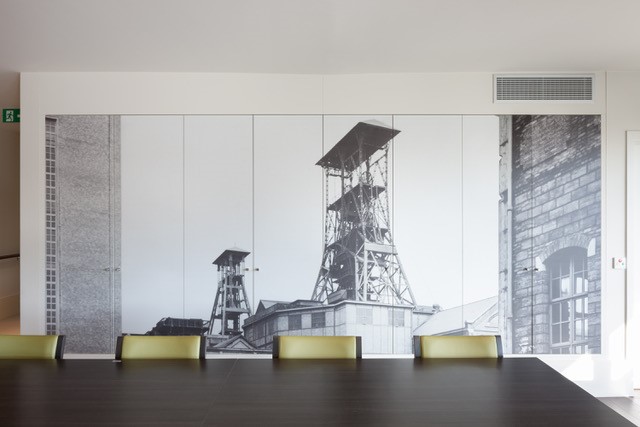
Acrylic is one of the most versatile and visually compelling substrates for UV printing. Its smooth, non-porous surface produces clean, vibrant color with crisp edge definition. Its optical properties — particularly in clear grades — allow for techniques like reverse printing and face-mount displays that aren't possible on any other substrate. And its availability in a wide range of thicknesses, colors, and finishes makes it equally suited to interior signage, gallery-quality art prints, and custom architectural elements.
How UV Printing on Acrylic Works
UV flatbed printers deposit UV-curable ink directly onto the acrylic surface using piezoelectric inkjet print heads. The ink is cured instantly as it's deposited by UV LED or mercury vapor lamps mounted alongside the print head carriage. Because UV ink cures by photopolymerization rather than evaporation, it bonds to the acrylic surface as a solid polymer layer — producing prints that don't require drying time and are immediately scratch- and smudge-resistant upon leaving the printer.
The smooth, chemically inert surface of acrylic is an excellent UV printing substrate. Most UV inks adhere well to acrylic without any primer or corona treatment, though adhesion promoters or primers are sometimes used for maximum bond strength on extruded grades or for applications involving frequent handling.
Cast vs. Extruded Acrylic for UV Printing
Cast acrylic
Cast acrylic is manufactured by polymerizing liquid methyl methacrylate monomer in molds or between glass plates, producing a material with excellent optical clarity, consistent surface chemistry, and high molecular weight that accepts UV ink adhesion particularly well. Cast acrylic is more dimensionally stable under heat than extruded acrylic, making it better suited to UV printing environments where heat buildup can cause warping.
For archival-quality prints, high-end gallery panels, and applications where optical clarity is critical, cast acrylic is the specified substrate.
Extruded acrylic
Extruded acrylic is produced by continuously pushing molten acrylic through a die, creating sheets of uniform thickness at lower production cost than cast sheet. Extruded acrylic has slightly lower molecular weight, can have minor surface variation, and is more susceptible to heat distortion. For standard commercial signage, display panels, and cost-sensitive production work, extruded acrylic performs well and is widely available.
UV adhesion on extruded acrylic is generally good without treatment; an adhesion primer is recommended for maximum durability on applications involving heavy handling or outdoor conditions.
Acrylic Grades and Colors for UV Printing
Acrylic is available in hundreds of colors and finishes, each offering distinct visual results when UV printed:
- Clear/transparent — the most versatile for reverse-print face-mount applications; color prints viewed through clear acrylic gain depth and vibrancy
- White opaque — the most common substrate for standard signage and display applications; white base provides full color accuracy without a printed white layer
- Black and dark colors — require white ink underprint for accurate color reproduction; can produce striking high-contrast designs when printing is designed to work with the dark base
- Frosted/satin — creates a soft-diffuse look through the acrylic that works well for backlit display applications
- Mirror and metallic — UV printing on mirror acrylic creates dimensional visual effects; the reflective surface interacts with the printed image
- Fluorescent colors — UV printing on fluorescent acrylic intensifies color vibrancy, particularly effective for retail and event display applications
Reverse Printing on Clear Acrylic
One of the most distinctive UV acrylic printing techniques is reverse-face printing: the design is printed in mirror image on the back of a clear acrylic panel, which is then displayed face-forward. The viewer looks through the clear acrylic face at the print, giving the image a smooth, glass-like surface with visual depth.
For maximum vibrancy in reverse-print applications, a white ink flood coat is applied over the color layers after they're printed (since printing order is reversed), providing an opaque backing. The panel can then be backed with aluminum composite or foam board for rigidity.
This technique is widely used for:
- High-end photographic display panels
- Gallery-quality art prints
- Corporate lobby and feature wall installations
- Luxury retail brand displays
Surface Preparation for UV Printing on Acrylic
Cleaning
Acrylic must be free of dust, fingerprints, mold release agents, and static charge before printing. Clean with isopropyl alcohol (IPA) on a lint-free cloth. Static charge attracts dust and causes ink adhesion issues — anti-static treatment or air ionization before printing is standard practice in production environments.
Masking film removal
Most acrylic sheet ships with protective masking film on both faces. Remove masking only immediately before printing — acrylic scratches easily and should remain masked until the last possible moment. Ensure all masking adhesive residue is cleaned from the surface before it enters the printer.
Adhesion promotion
For standard direct-face printing on cast or extruded white acrylic, no adhesion promotion is typically needed. For extruded clear acrylic, reverse-print applications, or any use case requiring maximum handling resistance, an acrylic adhesion primer improves bond strength significantly. Apply primer, allow full cure time per manufacturer specification, then print.
UV Print on Acrylic — Performance Characteristics
Adhesion
Excellent on cast acrylic. Good on extruded without treatment; excellent with adhesion primer.
Indoor Durability
10+ years under normal display conditions without topcoat. Scratch resistance improves significantly with UV clearcoat.
Outdoor Durability
5–10 years with UV-stabilized ink and clearcoat. Acrylic itself is UV-resistant; ink durability is the limiting factor without topcoat.
Resolution
720–1440 DPI. Smooth surface enables full utilization of maximum printer resolution — excellent for photographic reproduction.
Color Gamut
Very wide on white substrates. Full color with white underprint on clear or colored acrylic.
Thickness Range
1.5mm to 50mm+ depending on printer z-axis. Standard display work in 3–6mm thickness.
Applications for UV-Printed Acrylic
- Interior and exterior signage — lobby panels, building directories, facility identification, safety signage
- Retail display and point-of-purchase — shelf strips, counter displays, product backers, brand panels
- Gallery and photographic display — fine art prints, photographic panels, face-mount display systems
- Corporate and office environments — reception wall graphics, wayfinding, award panels, branded installations
- Hospitality and events — custom table signage, event branding, stage displays
- Promotional and personalized products — custom name plaques, commemorative panels, awards
- Architectural and interior design — feature wall panels, partition graphics, decorative screens
Frequently Asked Questions
Can you UV print directly on acrylic?
Yes. Acrylic is an excellent UV printing substrate. The smooth surface accepts UV-curable ink with strong adhesion, producing sharp, vibrant prints without needing transfer media or lamination. Most grades print without any surface treatment.
What's the difference between cast and extruded acrylic for printing?
Cast acrylic produces better adhesion, superior optical clarity, and greater dimensional stability under heat. Extruded is less expensive and fine for most commercial applications. For gallery-quality panels or archival-grade work, specify cast acrylic.
Can you print on the back of clear acrylic?
Yes — this is called reverse-face or "second-surface" printing. The design is printed in mirror on the back of the acrylic, then viewed through the clear face. A white flood coat is typically applied over the color to provide an opaque backing. The result is a glass-like surface with excellent visual depth.
Does UV-printed acrylic need a clearcoat?
Not required for standard indoor display use. For outdoor applications, high-handling products, or maximum scratch resistance, a UV clearcoat significantly extends product life.
Can white be printed on dark acrylic?
Yes — UV printers with white ink capability can print white (and full color over white) on any acrylic color including black, dark blue, or transparent. White ink is specified in the print file as a separate ink channel.
UV Printing on Acrylic — Get a Quote
PolyPrint provides UV flatbed printing on cast and extruded acrylic for signage, display, décor, and branded environment applications. Send us your project specs and we'll provide a fast, detailed quote.
Request a Quote See All Printable Surfaces