Buying Guide
UV Printing for
Dental Offices Facilities.
Operatory accent panels, reception branding, and suite wayfinding built for the surface disinfectants dental clinics actually rotate — not laminate or vinyl decals that dull after a year of wipe-downs.
Request a Quote →
What Dental Offices Usually Order
Most dental UV-print projects fall into a handful of categories, and each one stresses the coating differently:
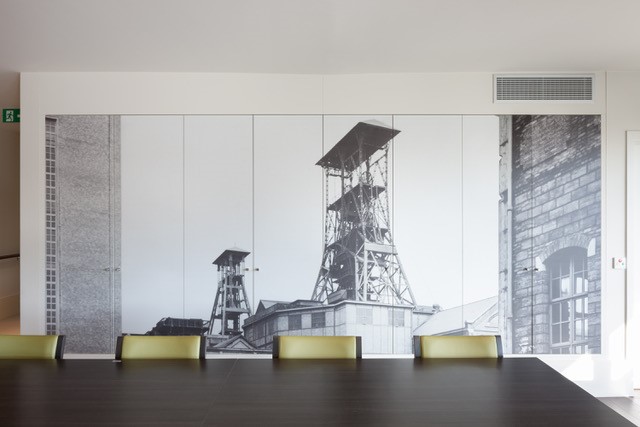
- Reception and waiting-area feature walls — brand colors, photography, and wayfinding that patients see first. Lower disinfectant load than operatories; aesthetics and color match matter most.
- Operatory accent panels — calm graphics or branded panels behind or beside the chair. These take the heaviest between-patient wipe-downs and need a clinic-rated topcoat from day one.
- Corridor and suite wayfinding — room numbers, suite names, and directional signs that keep multi-operatory offices moving. Consistency across a remodel or a second location is the usual ask.
- Sterilization and lab-adjacent labels — durable identification on cabinets, pass-throughs, and storage. Highest chemical exposure; light decorative finishes fail here first.
- Donor, partner, or practice-history walls — recognition graphics that still need to wipe clean in a clinical building.
How Dental Projects Differ From General Healthcare Branding
A hospital corridor and a four-operatory dental suite are not the same environment. Dental offices concentrate disinfectant wipe-downs into smaller rooms, cycle patients faster, and often renovate one suite at a time while the rest of the practice stays open. That changes how we stage production and installation:
- Phased installs — print and install one or two operatories at a time so the schedule does not shut the whole office down.
- Smaller panel sizes — operatory walls are tight; large tiled murals are less common than fitted panels cut to the available clear wall.
- Color continuity with cabinetry and solid surface — many build-outs already specify a solid-surface counter color; matching or complementing that finish keeps the room coherent. See our guides on UV printing on acrylic and UV printing on glass when those substrates are part of the design package.
- Infection-control adjacency — we stay in the branding and wayfinding lane. Anything that functions as a clinical device surface or sterile-field material needs its own materials review outside a standard print quote.
File Prep and Proofing for Clinic Builds
Dental groups that open multiple offices save the most time when the first approved set of files becomes the template for every later location. That means locking Pantone or measured color values, noting the exact substrate and topcoat, and keeping a proof photo of the installed flagship suite on file. Our file prep guide, color matching guide, and sample and proofing process cover what to send before the first panel is produced. For reorders when a suite is remodeled years later, the reorder process guide explains what we need on record so the new panels match the originals.
When UV Printing Is the Wrong Spec
Be direct about the limits. UV printing is a strong fit for wipeable interior branding and wayfinding. It is the wrong default for:
- Surfaces inside a sterile instrument workflow or that contact open tissue as part of care
- Temporary promotional graphics meant to change every few weeks — vinyl or changeable inserts can be cheaper there
- Exterior monument signs that need a different outdoor weatherproofing stack than an operatory panel
- Projects where the landlord or design standard already locks a specific laminate or paint system that cannot accept a printed panel overlay
If you are unsure which side of that line a surface sits on, describe how the room is cleaned and whether the surface plays any clinical role. That answer usually settles the spec faster than a catalog of ink brands. When you are ready, request a quote with the floor plan and cleaning protocol for each room type.