Home Sports Surfaces Testing About Request a Quote
Surface Guide

UV Printing
on Aluminum.

Full-color graphics, serial numbers, and branding printed directly onto aluminum signs, panels, and industrial parts — when the finish is cleaned, qualified, and proofed the right way.

Request a Quote →
The Short Answer

Can You UV Print on Aluminum?

Yes. A flatbed UV printer lays cured ink directly onto rigid aluminum and many aluminum products. The catch is that "aluminum" is not one surface. Bare mill finish, sealed anodizing, painted sheet, powder coat, and aluminum composite panel (ACM) skins each present a different interface to the ink. Adhesion is decided by cleanliness, finish chemistry, primer choice, cure, and a tape test on the exact batch you are about to run — not by a generic claim that UV ink sticks to metal.

Where It Shows Up

What People Actually Print on Aluminum

Most aluminum jobs are identification and branding that has to survive handling: equipment nameplates, asset tags, control-panel faces, machine housings, architectural sign panels, and indoor wayfinding blades. Retail and hospitality spaces use brushed or anodized aluminum for menu boards, donor walls, and elevator cab graphics where a vinyl wrap would look temporary.

Industrial buyers also print operating instructions, barcodes, and safety legends directly onto aluminum covers so labels cannot peel off the first time someone cleans the enclosure. For broader metal guidance, see our metal surface printing overview. White underbase decisions for reflective metal are covered in our white ink and underprinting guide.

Architectural and indoor wayfinding panels
Equipment nameplates and asset tags
Control panels and machine housings
Retail and hospitality branded metal signs
ACM / Dibond-style face graphics
Talk Through Your Project →
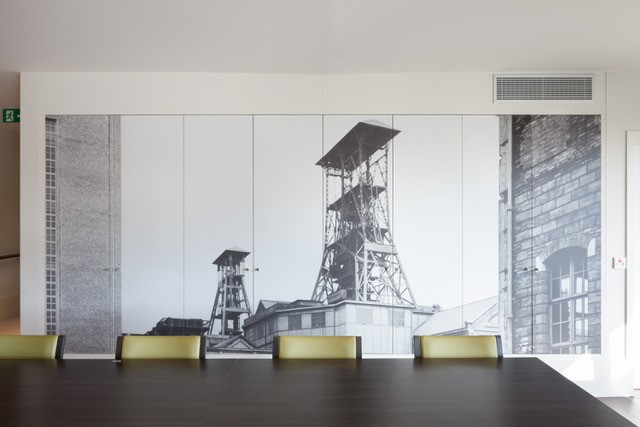
UV printed interior panel finish similar to aluminum architectural graphics
Finish Matters

Bare, Anodized, Painted, and ACM Are Different Jobs

Bare / Mill Aluminum

  • Often carries rolling oils, protective film adhesive, and fingerprints that block adhesion
  • Usually needs IPA cleaning plus a compatible metal adhesion promoter
  • Reflective face makes white underbase important for opaque brand colors
  • Edge and scratch wear show more than on coated sheet — plan handling

Anodized Aluminum

  • Open-pore anodizing can mechanically key ink; sealed anodizing can leave nothing to grab
  • Do not assume every "anodized" sheet prints the same — qualify the lot
  • Common for architectural plaques, equipment labels, and premium indoor signs
  • Compare with dye sublimation or engraving when the brief needs a different look — see UV printing vs anodizing

Painted / Powder-Coated

  • Ink bonds to the coating, not the aluminum underneath
  • If the factory finish is weak, the print can lift with the coating in a tape test
  • Powder coat chemistry varies — always test the exact color and supplier batch
  • Related: UV printing vs powder coating

ACM / Composite Skins

  • Aluminum composite panels (often sold under brand names like Dibond) print on the polymer-coated skin
  • Large flat sheets suit architectural sign faces and indoor graphics
  • Protective film residue is a common adhesion killer — remove and clean carefully
  • For general primer guidance see adhesion promoters and primers
How It Prints

Prep, White Underbase, and Adhesion Testing

Clean before you blame the ink

Most aluminum print failures start with contamination: machining oil, fingerprints, adhesive from the protective film, dust, or an invisible mill lacquer. Wipe with isopropyl alcohol (or the cleaner your ink and primer vendor specifies), keep bare hands off the print area, and let the surface dry fully before priming or printing. If the sheet arrived film-covered, remove the film and clean again — residue loves to hide under the edges.

White underbase decides opacity

CMYK alone on reflective aluminum lets the metal show through, which can look intentional for a tinted metallic logo. For solid brand colors, lay white first, then color. The artwork needs a separate white channel that matches the color art. Oversized white creates a halo; undersized white leaves a shiny fringe. Test the full white-plus-color stack — white increases film build and can change how the print flexes at edges.

Cross-hatch tape testing is not optional

UV ink sits on top of metal; it does not soak in like some solvent systems. Print a small coupon on the exact finish, cure it the way production will, cut a cross-hatch, and pull with the tape your shop standard uses. Ideal result: ink lifts only inside the cut lines. Broad peel means change primer, ink, cure, or substrate — do not scale a failing coupon into a wall of panels. Vendor guides from major UV platforms emphasize the same sequence: clean, print, cure, tape-test, then decide on promoter.

Clear coat and handling

Some outdoor or high-abrasion installs get a clear UV varnish for extra scuff resistance. That is another layer to qualify — varnish on poorly adhered color just makes a thicker flake. Edge wear on aluminum signs often shows first at corners and fastener holes; design margins and mounting so fingers and tools are not scraping the graphic during install. Shipping and crating notes for large panels live on our shipping and crating guide.
Spec Checklist

What to Send for an Aluminum Quote

  • Finish already specified: bare, anodized (sealed or not if known), painted color, powder coat, or ACM brand/skin
  • Finished sizes, quantities, and whether panels are cut before or after print
  • Indoor vs outdoor exposure, cleaning chemicals on site, and abrasion risk
  • Whether white underbase is required or metallic show-through is intentional
  • Artwork as vector files where possible, with Pantone or brand-color targets noted
  • Mounting method (standoffs, frame, adhesive, mechanical fasteners) and whether holes are pre-drilled
  • A physical sample of the exact finish whenever the sheet is unfamiliar

Our file prep requirements and sample and proofing process explain how to set up the white channel and approve a physical sample before the full run. Color-matching detail lives on color matching and Pantone. When you're ready, request a quote.

Honest Limits

When Printed Aluminum Is the Wrong Choice

  • Graphics that change every few weeks — a framed insert or magnetic face is cheaper to swap.
  • Surfaces that get scrubbed with aggressive solvents at the printed area unless the design keeps ink out of the cleaning zone.
  • Jobs that need true engraved depth or dyed anodized permanence for code or heritage reasons — UV print is a surface film, not an etched recess.
  • Unknown coated scrap with no sample for tape testing — we would rather refuse than guess.

We do not invent adhesion warranty years, outdoor fade ratings, or price-per-square-foot menus on this page. Aluminum print jobs are quoted from the finish, size, quantity, and exposure you actually have.

Related Surfaces

Keep Exploring

Have an Aluminum Project to Print?

Send the finish, sizes, and whether white underbase is required. We'll come back with what's feasible and pricing.