Home Sports Surfaces Testing About Request a Quote
Surface Application

UV Printing
on Fiber Cement.

Full-color graphics cured directly onto fiber cement facade board — with the primer, cure-time, and edge-sealing steps that decide whether the panel actually survives the building envelope.

Request a Quote →
The Short Answer

Can Fiber Cement Be UV Printed?

Yes, and it's already one of Polyprint's core facade materials — but fiber cement is a more demanding substrate than most people assume. The board is porous and alkaline, and it keeps curing and shedding moisture for a period after it leaves the factory. Print on board that hasn't finished curing, or skip an alkaline-rated primer, and the risk isn't an immediate failure — it's a print that hazes or blisters weeks or months after the panel is already installed on the building. Get the primer and cure timing right and printed fiber cement holds up to the same exterior punishment the unprinted board is built for.

How It Works

The Board's Chemistry Is the Real Variable

UV printing on fiber cement uses the same process as any rigid substrate — ink jets directly onto the panel and cures instantly under UV light, then gets sealed under a protective coating. What's different is what the board is doing underneath that print. Fiber cement is manufactured from cement, cellulose fiber, and sand, and it's alkaline and porous by nature. That alkalinity can interfere with ink cure and adhesion, and if the board hasn't finished its post-manufacture cure period, residual moisture and lime can migrate up through the print later and haze it from underneath — an effect that shows up on the wall, not on the shop floor.

A primer rated for alkaline, masonry-type substrates isolates the ink from that chemistry, and factory-primed board is generally the safer starting point over priming raw board on-site. Cut and routed edges are the other thing that gets missed: a panel trimmed to size after printing exposes raw, unsealed material at the edge that will wick moisture even though the face is fully coated — that edge needs its own sealing step, especially on open rainscreen joints where it's exposed to weather rather than covered by trim.

Alkaline-rated primer required — standard UV primers can underperform on raw fiber cement
Board must finish its manufacturer cure period before printing
Cut and routed edges need a separate sealing step
Full-color, photographic detail at architectural scale
Same UV-stable, scratch-resistant finish as every Polyprint surface
See Performance Data →
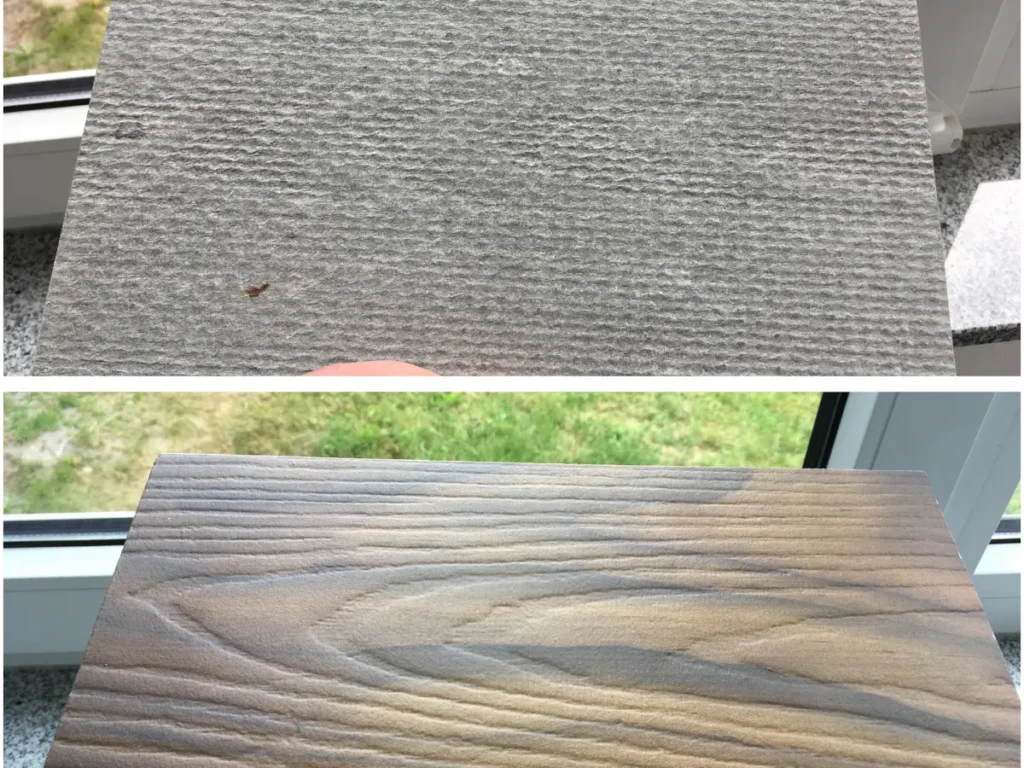
UV printed fiber cement facade panel with custom graphic
Fit Check

Where Printed Fiber Cement Fits — and What to Confirm First

The print process is straightforward. Getting a facade panel that survives ten years outdoors depends on the prep steps around it.

A Strong Fit

  • Rainscreen cladding and facade panels needing custom graphics or pattern repeats
  • Schools, transit, and public buildings specifying fiber cement for its fire rating and durability
  • Feature panels and signage where fiber cement's mineral, matte texture is the desired look
  • Factory-primed board from a known cure batch

Best Practice

  • Confirm manufacturer cure period is complete before printing
  • Use an alkaline-rated primer, not a generic UV primer

Comparing cladding materials for a facade job? Our aluminum composite panel (ACM/Dibond) guide covers the lighter-weight alternative and where it wins on dimensional stability.

Worth a Second Look

  • Freshly manufactured board with an unconfirmed cure timeline — ask the supplier before scheduling the print
  • Panels that will be field-cut or routed after printing, unless edge sealing is built into the install plan
  • Projects where weight matters more than fire rating — printed metal or ACM may be the better spec

What to Confirm Before a Run

  • Board manufacturer, batch age, and cure status
  • Whether panels will be cut or routed after printing
  • Fire rating and code requirements for the specific building type
Tested Durability

Built to the Same Standard as Every Polyprint Surface

Printed fiber cement is held to the same independently tested performance benchmarks that define all Polyprint applications.

☀️

UV Weathering

No Change at 3000h

EN ISO 16474-3 Atlas UV Test — zero surface change after 3000 hours of exposure.

✏️

Scratch Hardness

6H Pencil

EN 15184 pencil hardness test — rated 6H, the highest standard for coating hardness.

💥

Impact Resistance

>60N

EN 438-2 ball impact testing — maximum machine rating with no visible damage.

🧱

Adhesion

Primer-Dependent

Requires an alkaline-rated primer and a fully cured board — the two variables that decide long-term adhesion.

View Full Testing Data →
Where It Performs

What Do Buyers Use Printed Fiber Cement For?

Printed fiber cement spans facade cladding, public architecture, and feature installations.

Facade & Cladding

  • Rainscreen cladding systems with custom pattern or brand graphics
  • Full-building facade murals at architectural scale
  • Panel systems for schools, transit stations, and institutional buildings

Interior & Feature Use

  • Lobby and feature walls using fiber cement's mineral texture
  • Signage panels for public and commercial buildings

Why Buyers Choose It

  • Fiber cement's fire rating and code standing, plus custom design in one panel
  • Full-color, photographic detail no paint or applied vinyl finish can match at this scale
  • Same UV-stable finish across an entire facade system

Related Reading

Working on a facade or cladding project — rainscreen panels, feature walls, or full-building graphics? Tell us the board manufacturer, batch, and panel sizes, and we'll confirm prep requirements and pricing before committing panels to a print run. Request a quote here.

FAQ

UV Printing on Fiber Cement — Common Questions

Can you UV print directly on fiber cement board?

Yes, but the board's chemistry matters more than on most substrates. Fiber cement is alkaline and porous and keeps curing for weeks after manufacture. Printing on board that hasn't finished curing, or skipping an alkaline-rated primer, is the most common cause of poor adhesion and hazing on printed fiber cement.

Why does fiber cement need a primer before printing?

Raw fiber cement is porous and alkaline, which can interfere with ink cure, and lime migrating through an uncured board can haze a print from underneath weeks after installation. A primer rated for alkaline masonry-type substrates isolates the ink from that chemistry. Factory pre-primed board is often the more reliable starting point.

Does the board need to be cured before it can be printed?

Yes. Fiber cement continues to cure and off-gas moisture after manufacture, and printing too early can trap that behavior under the ink and show up later as blistering or haze. Confirm the manufacturer's recommended cure period before scheduling a run, especially on freshly manufactured stock.

Do cut or routed panel edges need sealing after printing?

Yes. Cutting or routing after printing exposes raw, unprimed material at the edge, which will wick moisture even though the printed face is sealed. Seal edges as a separate step, particularly on rainscreen systems where they're exposed to weather rather than hidden behind trim.

How does UV-printed fiber cement compare to printed ACM?

Fiber cement generally wins on fire rating and the mineral look architects specify it for. ACM is lighter and doesn't carry fiber cement's alkalinity and cure-time complications, but costs more per panel and rarely matches fiber cement's Class A fire performance. Confirm fire and code requirements with the project's facade engineer first. Request a quote here.

Explore More Surfaces

Related Applications

Have a Fiber Cement Facade Project in Mind?

Send us the board manufacturer, panel sizes, and cure status. We'll come back with prep requirements, the right specification, and pricing.