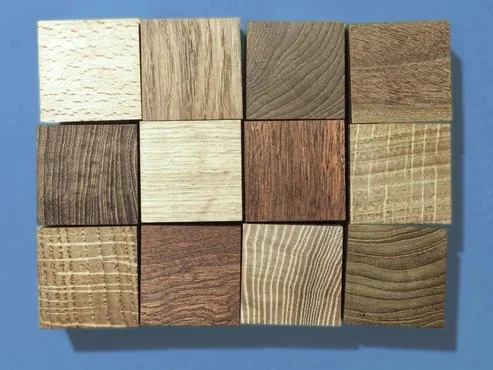
Photographic-quality woodgrain, pattern, or solid color printed straight onto a flat cabinet door or panel face — where it replaces laminate cleanly, and where a routed edge still needs a separate finish.
Request a Quote →Yes, for the flat face of the door. UV ink prints full-color woodgrain, pattern, or a solid finish directly onto MDF, plywood, or panel stock, curing instantly under UV light so the graphic is the finish rather than a laminate sheet or foil wrap bonded on top. It's a clean fit for slab-front, square-edge doors and flat millwork panels. It's a poor fit for anything with a routed profile, raised panel, or shaped edge, because a flatbed printer only reaches the flat face within the head's travel path — the edge still needs paint, edge banding, or another matched treatment layered on separately.
Laminate and thermofoil are built for volume — a supplier stocks a fixed set of patterns and a manufacturer wraps doors to match. Direct UV printing flips that: any woodgrain, pattern, brand color, or photographic image can go on the door face without waiting on a laminate supplier's catalog or committing to a minimum roll of one pattern. That's the real advantage for a designer chasing a non-standard finish or a fabricator filling a one-off custom kitchen order that a laminate distributor wouldn't stock for.
Our UV printing on wood guide covers the primer and grain-prep side of printing on real wood veneer specifically; most cabinetry work runs on MDF or engineered panel stock instead, which takes ink more predictably than natural wood's variable grain and moisture content. Where a project also has stone or solid-surface counters to match, our Corian and solid surface guide covers printing the same finish across both material types in one visual program.
Talk Through a Cabinet Run →
Order size drives cost more than most people expect going in. Our minimum order quantities guide covers how a single custom kitchen's door set — not a distributor-scale run — still gets quoted and produced, just at a different per-door cost than a cabinet manufacturer ordering across multiple kitchens on the same pattern.
Architects and interior designers speccing cabinetry as part of a larger fit-out should also see our interior design and architecture guide, which covers the same flat-panel-before-fabrication logic for millwork more broadly — a compound-curved or post-formed edge has to be printed flat before it's shaped, the same rule that applies to a routed cabinet door edge.
Before committing to a full run, get a physical sample panel checked against the room, not just a screen file. Our sample and proofing process guide covers why a printed reference held next to the actual countertop or hardware catches a color mismatch that a monitor never will.
Printed cabinet and millwork panels are held to the same independently tested performance benchmarks that define all Polyprint applications.
EN 15184 pencil hardness test — rated 6H, the highest standard for coating hardness.
EN 438-2 ball impact testing — maximum machine rating with no visible damage.
DIN EN 14354 Taber Abraser — achieved classification 31 in tested conditions.
Any woodgrain, color, or photographic pattern — not limited to a laminate distributor's catalog.
On the flat face, generally yes — UV ink prints a photographic-quality finish directly onto the panel instead of wrapping it in laminate. The catch is edges: a flatbed printer only reaches the flat face, so a routed or profiled edge still needs paint, edge banding, or a matched separate treatment. Slab-front, square-edge doors are the cleanest fit.
With the right topcoat, yes, for normal splashback and humidity. It's not rated for sustained direct heat contact, so keep the clearance from an oven vent that any cabinet material would need — that's an installation detail, not a printing limitation.
Yes — the full door set prints from one file and one color profile, scheduled close together, so grain and tone read continuous across adjacent doors and drawer fronts. Submit the full door schedule up front rather than ordering door by door.
A single custom kitchen's worth of doors is a realistic order, not just distributor-volume runs — it costs more per door than a multi-kitchen manufacturer order, but a small run isn't turned away.
A physical sample panel gets printed and approved before the full set runs — for cabinetry, check it against the actual counter or hardware finish under real room lighting, not just a screen. Request a quote here.
Tell us the door style, panel count, and whatever it needs to match. We'll confirm feasibility, edge treatment, and pricing.