Home Sports Surfaces Testing About Request a Quote
Substrate Guide

UV Printing on
Melamine & Laminate.

Melamine-faced board and high-pressure laminate look like any other flat panel stock — but the resin skin on top bonds weakly to standard UV coating without a primer step. Here's what actually holds, and where a printed fixture is the right call.

Request a Quote →
The Short Answer

Does UV Ink Actually Stick to Melamine?

Not on its own, reliably. Melamine-faced board — particleboard or MDF core wrapped in a thermally fused melamine-formaldehyde resin skin — presents a hard, sealed, low-porosity surface that published adhesion research describes as an inherently weak interface for standard UV coating. Ink lays down and looks correct the day it's printed; the problem shows up later, as flaking at edges and corners under normal handling. A silane-based adhesion promoter or a UV-specific pretreatment formulated for melamine closes that gap before the job goes to press, and it's standard prep for this substrate — not a workaround for a difficult one-off.

Where It Shows Up

Retail Fixtures, Not Cabinet Doors

Melamine board's whole appeal in fabrication is that it ships pre-finished and cheap, in a limited catalog of patterns — which is exactly why brands want to print on it instead of settling for whatever a laminate distributor stocks. Retail gondola shelving, point-of-purchase counters, office partition panels, and reception desk faces are the recurring order: fixtures already built or specified in melamine before they reach us, where a custom finish needs to go on top of material that's already there.

That's a different job from replacing laminate outright — see our cabinetry and millwork guide for printing directly onto bare MDF instead of laminating it at all, which is the cleaner path when we're specifying the panel material from scratch rather than decorating stock that's already fabricated. Salon and barbershop station backsplashes are a laminate-adjacent order too, though the chemical exposure there usually calls for a different substrate spec — see our UV printing for salons and barbershops guide.

Retail gondola shelving and store fixture panels
Point-of-purchase display counters and kiosk faces
Office partition, desking, and reception panels
Reusable trade show booth panels in melamine or HPL
Adhesion promoter required — not optional — before printing
Talk Through Your Fixture Order →
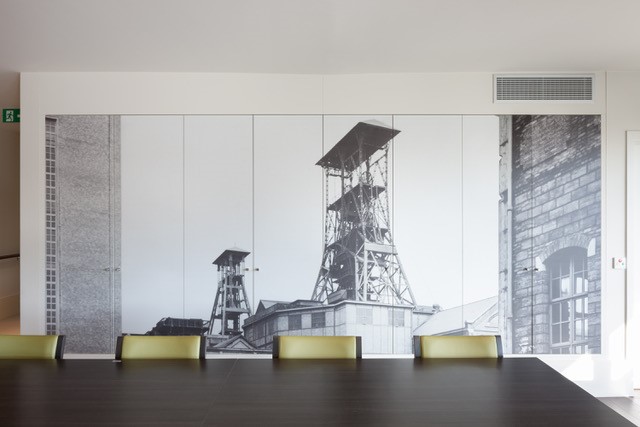
UV printed melamine and laminate office panel finish
Fit Check

Where Printed Melamine Fits — and Where It Doesn't

A Strong Fit

  • Retail fixtures and store displays needing a pattern no laminate line stocks
  • Office and reception panels where the melamine substrate is already specified
  • Flat panel faces with square edges, not routed or profiled trim

Worth a Second Look

  • Countertop or work surfaces taking heavy daily abrasion — confirm topcoat spec first
  • Panels with PVC edge banding, which prints and preps differently than the face

Not a Good Fit

  • Cabinet doors being specified from scratch — print bare MDF instead, see our cabinetry guide
  • A whiteboard's actual writing field — see our magnets and dry-erase guide for that case

What to Confirm Before It Goes to Print

  • That adhesion promoter is included in the process, not skipped to save a step
  • How the fixture gets handled day to day — corners and edges see the most wear
  • Whether panel edges are square or already edge-banded before printing
Material Reality

Why Melamine Has a Reputation for Poor Adhesion

Melamine-faced board is a particleboard or MDF core wrapped in a thermally fused melamine-formaldehyde resin — the same family of surface used on a lot of dry-erase board, low-cost cabinetry, and office furniture panels. That resin skin is hard, smooth, and sealed, which is great for wipe-down durability but bad for ink bonding: published testing on the interface between standard UV coating and melamine-faced board describes the bond strength as inherently weak compared to more porous or higher-surface-energy substrates. Print without addressing that, and the finish can look perfect the day it ships and still fail months later at a handled corner.

The fix is a chemical one, not a mechanical one — sanding the resin surface doesn't meaningfully help the way it does on wood. A silane-based adhesion promoter applied as a pre-print coat is the standard approach, and it's the same category of product used to prime glass and other low-adhesion substrates before UV printing. Some manufacturers also offer melamine-faced board pre-treated at the factory specifically for digital UV printing, which removes the promoter step from our process entirely if the fixture fabricator can source that stock instead of standard melamine.

Edge banding adds a second variable. Most melamine fixtures ship with PVC or ABS edge banding wrapped around the panel's cut edges, and that banding is a different plastic than the melamine face — it primes and prints closer to how our rigid plastic printing process handles PVC than the resin face does. Tell us up front whether the graphic needs to wrap onto the edge banding or stay on the flat face only, since that changes how the panel gets prepped and jigged for the pass.

What Goes Wrong

Common Failure Modes on Melamine — and How We Avoid Them

Adhesion failure at handled edges. This is the failure that matters most and shows up latest. A cross-hatch tape adhesion test — cutting a small grid into the printed surface and pulling tape across it — catches weak bonding before a job ships. We run that test on melamine work as a standard check, not an optional one, because a fixture that passes visual inspection on day one can still fail this test if the promoter step was rushed or skipped.

Fisheyeing from mold-release residue. New melamine sheet stock sometimes carries a thin release agent or handling wax from manufacturing, which causes UV ink to bead or crawl instead of laying flat — the same fisheye defect that shows up on some powder-coated metal with silicone additives. A solvent wipe-down before printing catches this on most sheet stock; sourcing pre-treated melamine sidesteps it entirely.

Chipped edges exposing raw particleboard core. Melamine board is typically cut to size after the resin face is applied, and a rough cut can chip the resin at the edge, exposing the porous particleboard core underneath. That core takes ink completely differently than the sealed face — usually absorbing it unevenly — so edges get inspected before printing, not caught after.

Print sitting directly over a seam or joint. Fabricated fixtures sometimes have two melamine panels butted together with a thin visible seam or a fastener line underneath the face. A graphic that crosses that seam will show a hairline break in the print over time as the panel flexes slightly at the joint — worth flagging in layout review so a seam either gets hidden in the design or the panel gets fabricated as one continuous piece before printing.

Send us the sheet spec, whether it's factory pre-treated or standard stock, and how the fixture gets used day to day, and we'll confirm the prep before it goes to press.

When Not To

When Melamine Isn't the Right Call

If a surface takes heavy daily abrasion — a busy retail checkout counter, a high-traffic cafeteria surface, anything getting scraped or cut on directly — a genuine high-pressure laminate (HPL) countertop material without a printed graphic on the wear zone usually outlasts a printed melamine face in that specific spot. Printing can still carry the branding on the surrounding vertical panels while the horizontal wear surface stays unprinted laminate, which is a common split on retail counters we build for.

And if the project is really about giving a cabinet door a custom wood-look or color finish from scratch, printing on bare MDF per our cabinetry guide gives a cleaner result than sourcing melamine board and adding a primer step — melamine prep is the right tool for decorating stock that's already fabricated in melamine, not for choosing a material from a blank slate.

Tested Standard

Same Coating Standard as Every Polyprint Surface

Once primed, melamine and laminate panels are finished under the same lab-tested performance benchmark used across every application.

🔬

Wear Resistance

Class 31

DIN EN 14354 Taber Abraser — relevant to retail fixtures and office panels seeing daily contact.

✏️

Scratch Hardness

6H Pencil

EN 15184 pencil hardness test — relevant to counters and shelving edges handled often.

🔬

Adhesion

Primer Required

Cross-hatch tape adhesion testing passes reliably only with a silane-based promoter or pre-treated sheet.

☀️

UV Weathering

No Change at 3000h

EN ISO 16474-3 Atlas UV Test — relevant to fixtures near storefront glass or a window.

View Full Testing Data →
FAQ

UV Printing on Melamine & Laminate — Common Questions

Does UV ink stick to melamine board without any prep?

Not reliably. Published testing describes the bond between standard UV coating and melamine-faced board as inherently weak, which shows up as flaking under normal handling, not a day-one defect. A silane-based adhesion promoter or a UV-specific melamine pretreatment closes that gap and is standard prep for this substrate.

Is this the same as UV printing on wood or MDF?

No. Bare wood and MDF are more porous — see our UV printing on wood guide for that prep. Melamine is a sealed, low-porosity resin skin that needs a chemical adhesion promoter instead of sanding or sealing.

Should cabinet doors be printed as melamine, or as bare panel like your cabinetry guide describes?

As bare panel, in almost every case — our cabinetry and millwork guide covers printing directly onto MDF as a laminate replacement. Melamine prep applies when a fixture already exists in melamine before it reaches us.

What happens if the primer step gets skipped on a melamine order?

The print looks correct on day one — this is a durability failure, not a visual one. It shows up weeks or months later as flaking at handled edges and corners, which is exactly what a cross-hatch tape adhesion test is designed to catch before a job ships.

What melamine and laminate products get UV printed most often?

Retail store fixtures, point-of-purchase counters, office partition and desking panels, reception desk faces, and trade show booth panels. Tell us the fixture and we'll confirm the prep.

Explore More Surfaces

Related Applications

Have a Melamine or Laminate Fixture to Print?

Send us the sheet spec and how the fixture gets handled day to day. We'll confirm the primer step and pricing before it goes to press.

Website by Rank Easy Digital — websites, SEO & AI search visibility for your business. Get a free consult →