Home Sports Surfaces Testing About Request a Quote
Surface Application

UV Printing
on Foam Board.

Vibrant, lightweight graphics printed direct-to-substrate on foamex, PVC foam, and Kapa board — for retail signage, exhibition displays, and interior graphics that need to go up fast and cheap.

Request a Foam Board Quote →
The Short Answer

Is Foam Board a Good UV Printing Substrate?

Yes, for the jobs it's built for — foam board is light, cheap relative to rigid panel alternatives, and takes UV ink directly with no lamination or mounting step needed. It's the wrong call for anything that has to survive years outdoors or take repeated rough handling: the foam core dents, exposed cut edges can take on moisture, and unprotected surface color starts to chalk under sustained UV exposure well before an aluminium composite panel would show any wear.

How It Works

Direct-to-Substrate, No Mounting Step

UV printing lays ink straight onto the foam board's smooth PVC or paper-faced surface and cures it instantly under UV lamps, which eliminates the print-and-mount workflow older display processes required — no separate print run laminated onto a board afterward. That means fewer production steps, fewer chances for bubbling or misalignment, and a faster turnaround from file to finished panel.

A white ink underlay is used on colored or tinted boards to keep artwork accurate, and the smooth PVC face of standard foamex produces sharp, photographic-quality results at full color. Once printed, boards can go straight to CNC cutting, routing, or hand-cutting for shaped display pieces without any further finishing.

Direct-to-substrate — no separate print-and-mount step
3mm, 5mm, 10mm, and 19mm thickness options
White ink underlay for accuracy on colored boards
CNC routeable and cuttable to custom shapes after printing
Fraction of the weight of aluminium composite or glass at equal thickness
Get a Foam Board Quote →
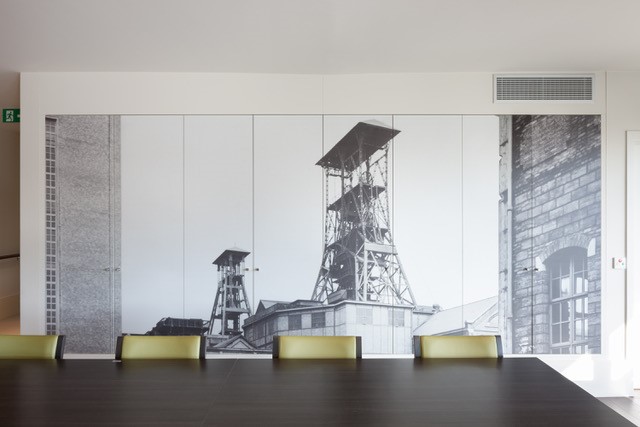
UV printed foam board panels for retail and exhibition display
Fit Check

Where Foam Board Fits — and Where It Doesn't

Foam board wins on weight and cost. It loses fast once a job needs long-term outdoor life or heavy handling.

A Strong Fit

  • Retail POS, shelf signage, and short-run promotional graphics
  • Exhibition and trade show stand backdrops and panel displays
  • Interior wayfinding in climate-controlled environments
  • Shaped display elements — CNC-cut letters, silhouettes, logo pieces

Cost & Weight

  • Cheaper than ACM or acrylic at comparable panel sizes
  • Light enough for hanging displays and frequent exhibition transport

Worth a Second Look

  • Permanent or multi-year exterior signage — ACM lasts far longer outdoors
  • High-traffic public areas where dents and edge damage are likely
  • Large panels (1.5m+) without a frame, where foam board can bow under its own weight

What to Confirm Before a Run

  • Interior or exterior placement, and expected display duration
  • Panel size relative to structural support or framing
  • Whether edges will be exposed to moisture or repeated handling
Foam Board Types

Which Foam Board Fits Which Job

Not all foam board is the same product — thickness and facing material change what it's suited for.

🧱

PVC Foam (Foamex, Forex)

Most Common

Smooth surface, good print quality, lightweight. 3mm–19mm. Best for retail, exhibition, and POS.

📄

Kapa Board

Lightest, Least Durable

Paper-faced polystyrene foam. Good for short-term display; not recommended outdoors.

🔩

Aluminium-Faced Board

Stiffest Option

Heavier but excellent print surface and rigidity — a step up before moving to full ACM.

✂️

Expanded PVC (Palight, Sintra)

Easiest to Fabricate

Routs and cuts cleanly for shaped elements; print quality comparable to standard foamex.

View Full Testing Data →
Where It Performs

What Do Buyers Use Printed Foam Board For?

Foam board's weight and cost advantage puts it at the center of retail, exhibition, and event display work.

Retail & Events

  • Product display panels, shelf signage, and window graphics
  • Exhibition stand backdrops and product presentation boards
  • Photo walls and branded event backdrops

Interior & Fabrication

  • Interior wayfinding and office environmental graphics
  • CNC-routed shaped display elements and branded cutouts

Photography & Display

  • Gallery-style photographic panels on 5mm or 10mm board
  • A lighter, lower-cost alternative to dibond for interior display

Why Buyers Choose It

  • Fast turnaround with no print-and-mount step
  • Lowest weight-to-cost ratio of any rigid display substrate
  • Cuts and shapes cleanly for custom display elements

Working on a display or signage run — retail, exhibition, or interior? Tell us the panel size, thickness, and whether it's going indoors or out. Request a quote here.

FAQ

UV Printing on Foam Board — Common Questions

What types of foam board can be UV printed?

The most common are PVC foam board (foamex/forex), expanded PVC (Palight, Sintra), Kapa board (paper-faced polystyrene foam), and aluminium-faced foam board. PVC foam board is the most popular — a smooth surface that accepts UV ink well, lightweight and rigid, and available from 3mm to 19mm thick. Kapa board is lighter but less durable; aluminium-faced board is stiffer and prints excellently but adds weight.

Is UV-printed foam board suitable for outdoor use?

Only short-term. Standard PVC foam board shows surface chalking and colour shift within 6-18 months of outdoor UV exposure without a protective laminate or coating, and the foam core can absorb moisture at cut edges over time. For anything meant to stay outdoors for years, aluminium composite panel (ACM) is the better substrate.

What thickness of foam board is best for large-format signage?

3mm is standard for short-term display graphics and POS. 5mm is the most common spec for retail and exhibition displays. 10mm is used for large-format panels and freestanding structures. Past roughly 1.5m, 10mm foam board or a switch to aluminium composite is usually needed to prevent bowing under the panel's own weight.

Can foam board be cut to shape after UV printing?

Yes. UV-printed foam board can be CNC routed, laser cut, or hand cut to custom shapes — commonly used for shaped retail display pieces, exhibition graphics, and custom silhouette signage. Cut edges are the weak point outdoors, since exposed foam core takes on moisture faster than a sealed face.

When should I choose a heavier substrate instead of foam board?

Any time the sign needs to survive more than a season outdoors, take repeated handling in a high-traffic space, or mount without a rigid frame — foam board dents more easily than dibond or acrylic and doesn't self-support at large sizes. For permanent exterior signage, ACM is the standard recommendation. Request a quote here.

Explore More Surfaces

Related Applications

Have a Foam Board Project in Mind?

Send us your panel size, board type and thickness, quantity, and whether it's indoor or outdoor use. We'll come back with the right specification and pricing.